Speak Thai · Times of day
Good Morning in Thai
Here’s the thing most phrasebooks won’t tell you plainly: Thai doesn’t really use a separate “good morning”. The everyday greeting สวัสดี covers the whole day. There is a formal morning phrase, and there are natural ways to talk about morning, evening and night, so this page gives you both what exists and what people actually say.

The short answer
- Thai has no everyday “good morning”, สวัสดี (sà-wàt-dii) is used from dawn to bedtime.
- The formal morning greeting อรุณสวัสดิ์ (à-run-sà-wàt) exists but sounds bookish in conversation.
- To be time-specific, Thai adds the part of day: ตอนเช้า (morning), ตอนบ่าย (afternoon), ตอนเย็น (evening).
- Goodnight is the real exception, ราตรีสวัสดิ์ / ฝันดี are genuinely used.
What Thai actually uses
If you want one thing to remember, it’s this line:
| Thai | Say it | Meaning |
|---|---|---|
| สวัสดีครับ / ค่ะ | sà-wàt-dii khráp / khâ | Hello, morning, noon or night |
A Thai colleague arriving at 8am and a shopkeeper at 8pm will both greet you with the same word. Reaching for a special morning phrase is the sort of thing that marks a textbook learner. See how to say hello in Thai for the full greeting, including the wai.
The formal “good morning”
It does exist, and you’ll meet it on television, in speeches and in written greetings:
| Thai | Say it | Tone | Meaning |
|---|---|---|---|
| อรุณสวัสดิ์ | à-run-sà-wàt | Low | Good morning (formal, literary) |
Both this and สวัสดี share the same sà-wàt root, from Sanskrit. Using it with a street vendor would be a little like greeting a barista with “Good morrow”, understood, and slightly theatrical.
Talking about the parts of the day
This is the genuinely useful version. Thai marks time of day with a word you attach to a sentence, which is how you’d say “this morning” or “see you in the evening”:
| Thai | Say it | Meaning |
|---|---|---|
| ตอนเช้า | dtaawn-cháo | in the morning |
| ตอนบ่าย | dtaawn-bàai | in the afternoon |
| ตอนเย็น | dtaawn-yen | in the early evening |
| ตอนกลางคืน | dtaawn-glaang-kheun | at night |
So “good morning” as a wish becomes, more naturally, สวัสดีตอนเช้า (sà-wàt-dii dtaawn-cháo), literally “hello in the morning”. You’ll hear it, especially in service settings and on the radio, though plain สวัสดี is far more common.
Good afternoon and good evening
Same principle: there is no distinct everyday phrase, and สวัสดี covers both. If you want to be explicit:
| Thai | Say it | Meaning |
|---|---|---|
| สวัสดีตอนบ่าย | sà-wàt-dii dtaawn-bàai | Good afternoon |
| สวัสดีตอนเย็น | sà-wàt-dii dtaawn-yen | Good evening |
Note that Thai splits the evening: ตอนเย็น is the cooling-down part of the day, roughly late afternoon to dusk, while properly dark hours are ตอนกลางคืน. That split trips up English speakers who treat “evening” as one block.

Goodnight, the one that really is different
Unlike morning and afternoon, Thai has genuine, commonly used goodnight expressions:
| Thai | Say it | Meaning |
|---|---|---|
| ราตรีสวัสดิ์ | raa-dtrii-sà-wàt | Goodnight (formal) |
| ฝันดี | fǎn-dii | Sweet dreams (literally “dream well”) |
| นอนหลับฝันดี | naawn-làp fǎn-dii | Sleep well and sweet dreams |
ฝันดี is the warm, everyday one you’d send to a friend or partner at the end of the night. ราตรีสวัสดิ์ is the formal counterpart, and again shares that sà-wàt root.
Putting it together
A realistic morning exchange in Thailand, with none of the phrasebook stiffness:
| Thai | Say it | Meaning |
|---|---|---|
| สวัสดีครับ | sà-wàt-dii khráp | Hello (man speaking) |
| สบายดีไหม | sà-baai-dii mǎi | How are you? |
| สบายดี ขอบคุณ | sà-baai-dii, khàawp-khun | I’m fine, thank you |
| กินข้าวหรือยัง | gin-khâao rěu-yang | Have you eaten yet? |
That last one deserves a note: “have you eaten yet?” is a genuine, common friendly opener in Thailand, closer to “how are you doing?” than to a literal question about food. Answering ยัง (yang, “not yet”) may well get you fed.
Read next: How to Say Hello in Thai, สวัสดี with its tone contour, the khráp/khâ particles, the wai gesture, and which greeting fits each situation.
How Dublo teaches this
Dublo teaches time-of-day language the way Thai actually uses it, attached to real plans, rather than as a list of translated English phrases.
Read the complete Dublo methodUse these tomorrow morning
Dublo teaches greetings the way they’re really used, with the tones broken down word by word. 14-day refund on your first payment.
Frequently asked questions
How do you say good morning in Thai?
In everyday Thai you say สวัสดี (sà-wàt-dii), the same greeting used all day. There is a formal phrase อรุณสวัสดิ์ (à-run-sà-wàt) meaning good morning, but it sounds literary in conversation. To be explicit you can say สวัสดีตอนเช้า (sà-wàt-dii dtaawn-cháo), literally hello in the morning.
Is there a separate good afternoon and good evening in Thai?
Not in everyday use. สวัสดี covers all times of day. If you want to be specific, add the part of day: สวัสดีตอนบ่าย for afternoon and สวัสดีตอนเย็น for evening. Note that ตอนเย็น means the late-afternoon-to-dusk period, while properly dark hours are ตอนกลางคืน.
How do you say goodnight in Thai?
Goodnight genuinely is different. ราตรีสวัสดิ์ (raa-dtrii-sà-wàt) is the formal goodnight, and ฝันดี (fǎn-dii), literally dream well, is the warm everyday version you'd say to a friend or partner. นอนหลับฝันดี combines sleep well and sweet dreams.
Why does Thai not have a good morning greeting?
สวัสดี itself is a modern, deliberately introduced greeting, promoted in the 1930s as a single all-purpose word, so Thai never developed the time-of-day set that English has. The formal อรุณสวัสดิ์ was coined alongside it and stayed largely literary.
What does Thai say instead of how are you in the morning?
A very common friendly opener is กินข้าวหรือยัง (gin-khâao rěu-yang), have you eaten yet. It functions socially like how are you doing rather than as a literal question, though answering not yet may well get you offered food.
Keep learning
 Greetings
How to Say Hello in Thai
สวัสดี with its tone contour, the khráp/khâ particles, the wai gesture, and which greeting fits each situation.
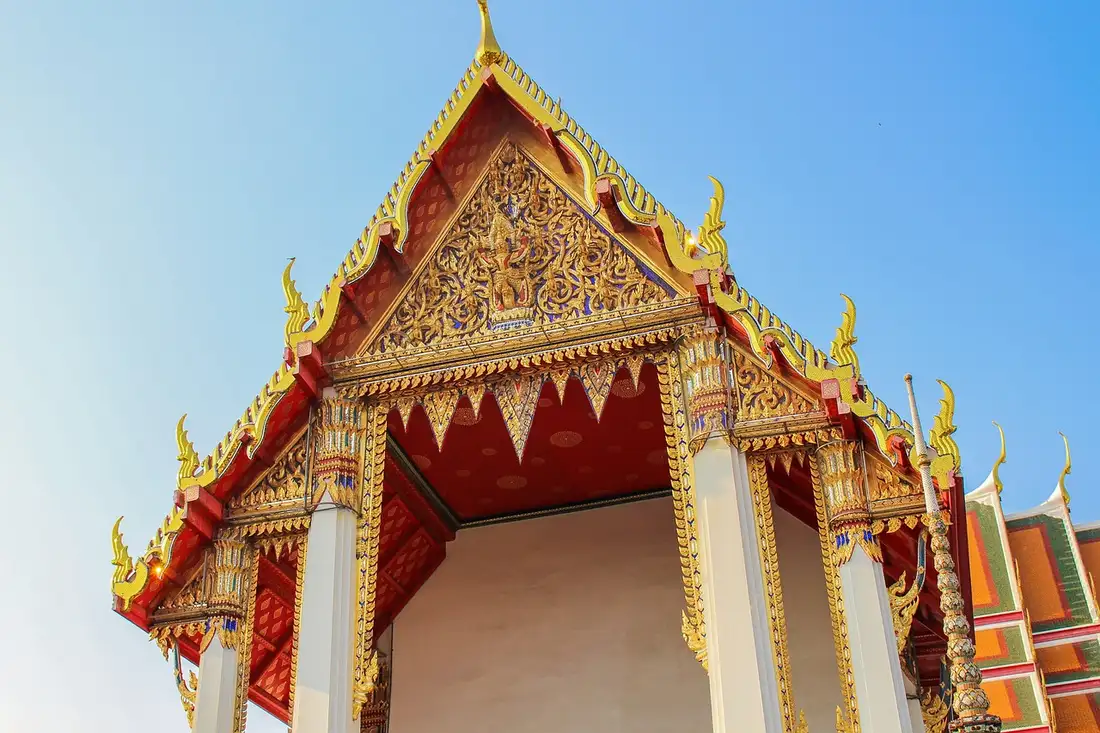 Word origin
What Sawasdee Actually Means
It means hello and goodbye, but literally wellbeing, from Sanskrit svasti, and far younger than most assume.
 Politeness
Khráp and Khâ Explained
The particles that make Thai polite: why they follow your gender, when women use khá, and how much politeness to use.
 Basics
Basic Thai Phrases
The common, everyday words and short sentences you’ll reach for most as a beginner.